
Best AI Tools for Systematic Reviews 2026: 5 Compared
Linda
Compare 5 AI tools for systematic reviews in 2026, including Noah AI, Elicit, and more. See which tools are best for searching, screening, extraction, and synthesis.
Compare five AI and research tools for systematic reviews in 2026, including Covidence, Rayyan, ASReview, Elicit, and Noah AI. See where each tool fits across screening, data extraction, evidence synthesis, auditability, and the broader systematic-review workflow.
Feature information checked: October 16, 2026. Product capabilities and pricing can change, so verify the current plan and feature availability before starting a long review.
Quick Summary
- Covidence is the strongest fit when the review needs a structured, team-based workflow covering screening, extraction, quality assessment, and review management.
- Rayyan is particularly useful for collaborative title-and-abstract screening, reviewer decisions, deduplication, and blinded workflows.
- ASReview is the strongest choice when open-source active-learning screening is the priority.
- Elicit is a strong choice for a more AI-native systematic-review workflow that connects search, screening, extraction, and synthesis.
- Noah AI is most useful when the bottleneck is biomedical evidence analysis: turning a medical research question or evidence set into structured comparisons, evidence tables, and source-traceable synthesis.
There is no single tool that is automatically best for every systematic review. The right choice depends on where the review is most constrained: protocol control, screening volume, structured extraction, evidence comparison, or synthesis.
Systematic reviews are not simply large literature searches. A credible review requires a defined question, explicit eligibility criteria, a documented search strategy, screening decisions, structured data extraction, quality or risk-of-bias assessment, synthesis, and transparent reporting.
AI can reduce some of the repetitive work inside that process. It can help prioritize records, organize studies, extract structured fields, identify patterns across papers, and prepare synthesis materials. But these capabilities are not interchangeable. A screening platform is not necessarily a synthesis platform, and an AI research agent is not automatically a systematic-review management system.
This comparison therefore evaluates five tools by workflow fit rather than by the length of their feature lists.
The five tools covered here are Covidence, Rayyan, ASReview, Elicit, and Noah AI.
AI Systematic Review Tool Criteria
The first step is to map each tool to the actual work performed during a systematic review.
| Review Phase | What Happens | Where AI Can Help |
|---|---|---|
| Protocol development | Define the research question, eligibility criteria, outcomes, and search strategy. | AI can help clarify terminology and structure the question, but methodological decisions remain with the review team. |
| Search | Identify potentially relevant records from databases and other sources. | Semantic search and terminology expansion can supplement conventional database searches. |
| Screening | Review titles, abstracts, and eventually full texts against predefined criteria. | AI can prioritize records and support screening decisions, but missed relevant studies remain a critical risk. |
| Data extraction | Collect study characteristics, interventions, outcomes, and other predefined fields. | AI can extract repeated fields from papers and organize them into structured tables. |
| Risk of bias / quality | Assess methodological quality using an appropriate framework. | Some platforms provide structured workflows or AI assistance, but the review team remains responsible for the final assessment. |
| Synthesis | Combine findings and determine what the evidence collectively supports. | AI can identify patterns, compare studies, organize themes, and prepare synthesis drafts. |
| Reporting | Document methods and findings transparently. | AI can help organize reports, but PRISMA reporting and methodological accuracy still require researcher oversight. |
The key distinction is simple: a tool can be excellent at one phase without being suitable as the system of record for the entire review.
The Four-Handoff Test
A useful way to evaluate systematic-review software is to test what happens when work moves from one stage to another.
| Handoff | Pass Signal | Risk if Missing |
|---|---|---|
| Record export | Records can leave the platform with stable identifiers. | The review team may struggle to reproduce or transfer screening work. |
| Decision preservation | Include, exclude, maybe, labels, and conflicts remain visible. | Important reviewer decisions become difficult to audit. |
| Field stability | Extraction fields remain consistent across studies. | Different reviewers may extract different information from similar studies. |
| Cited synthesis | Final claims can be traced back to the studies supporting them. | A polished final answer can become difficult to verify. |
This test explains why a single "best AI systematic review tool" is difficult to define. Different products optimize different handoffs.
How We Compared the Tools
We compared the five tools across five systematic-review workflow dimensions:
- Screening: Screening workflows, reviewer controls, and active-learning capabilities.
- Data extraction: Structured extraction fields and reusable extraction workflows.
- Bias / quality: Risk-of-bias assessment support and quality-control processes.
- Auditability: Reviewer decisions, source traceability, and export capabilities.
- Synthesis: Cross-paper comparison and evidence synthesis.
This is a qualitative, feature-based comparison informed by publicly documented product capabilities and the Noah AI examples presented in this article. The five products were not evaluated through equivalent hands-on tests. Therefore, we do not assign numerical scores or claim comparative accuracy or performance rankings.
| Tool | Screening | Extraction | Bias / QA | Audit | Synthesis | Total |
|---|---|---|---|---|---|---|
| Covidence | 2 | 2 | 2 | 2 | 1 | 9 |
| Elicit | 2 | 2 | 1 | 1 | 2 | 8 |
| Rayyan | 2 | 1 | 1 | 1 | 1 | 6 |
| Noah AI | 0 | 2 | 0 | 1 | 2 | 5 |
| ASReview | 2 | 0 | 1 | 1 | 0 | 4 |
Feature Comparison Table
The table below separates formal systematic-review controls from AI-assisted evidence analysis. This distinction is important because a research agent can be excellent at synthesis without being designed to manage reviewer screening decisions.
| Tool | PRISMA / Review Controls | Screening | Extraction | Bias / QA | Audit | Best Fit |
|---|---|---|---|---|---|---|
| Covidence | Strong review-management controls | Strong for structured team screening | Strong extraction workflows | Strong quality / risk-of-bias workflows | Strong | Managed systematic reviews |
| Rayyan | Moderate review controls | Strong title / abstract screening | Structured extraction available | Blind review and conflict handling | Moderate | Collaborative screening |
| ASReview | Limited platform-level controls | Strong active-learning prioritization | Not its primary role | Reviewer QA remains important | Export-based | Open-source screening |
| Elicit | Dedicated systematic-review workflow | AI-assisted screening | Strong structured extraction | Requires researcher verification | Structured workflow and source support | AI-native systematic reviews |
| Noah AI | Not a formal systematic-review management platform | Not its primary role | Strong biomedical evidence extraction and comparison | Not a substitute for formal RoB assessment | Source-linked research output | Biomedical evidence synthesis |
The 5 Tools Compared
These tools should not be treated as interchangeable. Covidence, Rayyan, and ASReview are especially relevant to screening and review management. Elicit now covers a broader systematic-review workflow. Noah AI is positioned differently: it is most useful when the research problem is biomedical evidence analysis, structured comparison, and synthesis rather than formal reviewer adjudication.
Quick read:
- Covidence: best for a managed, team-based systematic-review workflow.
- Rayyan: best for collaborative screening and reviewer decisions.
- ASReview: best for open-source active-learning screening.
- Elicit: best for AI-assisted systematic-review search, screening, extraction, and synthesis.
- Noah AI: best for biomedical evidence comparison, structured evidence tables, and cited synthesis.
1. Covidence
Best for: End-to-end systematic review management.
Covidence is designed around the operational workflow of systematic reviews. It brings together reference management, screening, full-text review, data extraction, quality assessment, conflict resolution, and export workflows.
It is particularly relevant for research teams that need multiple reviewers working from the same review environment rather than assembling several independent tools.
What it does well:
- Title and abstract screening
- Full-text screening
- Duplicate handling
- Structured data extraction
- Quality and risk-of-bias workflows
- Reviewer collaboration and conflict resolution
- Export of review data
Strengths: Strong review-management structure; designed around systematic-review workflows; useful for multi-reviewer projects; strong extraction and quality-assessment workflows.
Tradeoffs: May be more infrastructure than a solo researcher needs; it is primarily a review-management platform rather than a general biomedical research agent; researchers still need an appropriate search strategy and methodology outside the software itself.
Best choice when: the main problem is keeping a formal systematic review organized from screening through extraction and quality assessment.
2. Rayyan
Best for: Collaborative title-and-abstract screening.
Rayyan focuses heavily on the screening stage. Researchers can import references, organize records, apply inclusion or exclusion decisions, use labels and exclusion reasons, collaborate with other reviewers, and work with blinded decisions.
Its relevance ranking and other AI-assisted capabilities can help researchers prioritize the screening queue. The important methodological point is that AI prioritization does not remove the need for human review.
What it does well:
- Title and abstract screening
- Include / Exclude / Maybe decisions
- Blinded reviewer workflows
- Conflict resolution
- Duplicate detection
- Relevance ranking
- PICO-related organization on supported plans
- Structured review data and exports
Strengths: Fast screening workflow; strong collaboration features; useful for teams with large screening workloads; free entry-level access is useful for smaller projects.
Tradeoffs: Screening remains its strongest use case; more complex synthesis may require additional tools; AI ranking should be validated against reviewer decisions.
Best choice when: your review already has a search dataset and the biggest bottleneck is screening thousands of records efficiently.
3. ASReview
Best for: Open-source active-learning screening.
ASReview takes a different approach from conventional review-management software. It uses active learning to prioritize records during screening. As the reviewer labels records, the model uses those decisions to improve the order in which subsequent records are presented.
This makes ASReview especially interesting for large screening datasets where the main objective is to reduce the amount of manual reading required to find relevant records.
What it does well:
- Active-learning screening
- Record prioritization
- Multiple model configurations
- Screening simulations
- Progress tracking
- Open-source workflow
- Local or technical deployment options
Strengths: Free and open source; transparent research-oriented approach; strong fit for large screening datasets; useful for researchers interested in active-learning methodology.
Tradeoffs: Not a complete systematic-review management hub; does not replace structured extraction and quality-assessment workflows; technical setup can require more effort than browser-first products; human reviewer decisions remain central to the workflow.
Best choice when: you want transparent, open-source active learning and are comfortable assembling the remaining review workflow yourself.
4. Elicit
Best for: AI-assisted systematic-review workflows.
Elicit has expanded beyond simple paper search and extraction. Its current Systematic Review workflow connects source gathering, screening, data extraction, and synthesis/reporting into a more structured review process.
That makes Elicit one of the closest matches in this list to a dedicated AI-assisted systematic-review workflow.
What it does well:
- Research-question-driven paper discovery
- Systematic-review screening
- Full-text review workflows
- Custom extraction fields
- Structured evidence tables
- Supporting evidence for extracted information
- Evidence synthesis and report generation
- Exportable research outputs
Strengths: Strong combination of search, screening, extraction, and synthesis; useful when the review requires structured fields across many papers; AI assistance is integrated into the workflow rather than being limited to paper summarization; good fit for researchers who want more automation without building a multi-tool stack.
Tradeoffs: Plan-dependent access to the dedicated Systematic Review workflow; AI-generated screening and extraction decisions still require verification; researchers must distinguish AI assistance from their formal review methodology.
Best choice when: the project is explicitly a systematic review and you want AI assistance across several review stages rather than only search or extraction.
5. Noah AI
Best for: Biomedical evidence comparison and cited synthesis.
Noah AI occupies a different position from the formal systematic-review platforms above. It is a life-science research Agent designed for biomedical research questions, evidence retrieval, structured analysis, study comparison, and cited research outputs.
That distinction matters. Noah AI is not a complete systematic-review management platform. It can assist with biomedical evidence retrieval, structured extraction, cross-paper comparison, and source-linked synthesis, but it does not replace formal protocol development, independent dual-reviewer screening, risk-of-bias assessment, or PRISMA documentation and workflow management. These methodological responsibilities must remain under researcher control and may require dedicated systematic-review software.
Its strongest use case is the part of the process that begins after the evidence has been identified: understanding what the studies collectively show, extracting comparable fields, organizing evidence into tables, and producing a source-traceable synthesis.
What it does well:
- Biomedical research questions
- Medical literature and evidence retrieval
- Study-level evidence extraction
- Cross-paper comparison
- Structured evidence tables
- Literature review matrices
- Evidence synthesis
- Cited research outputs
- Identification of methodological differences across studies
Where Noah is different:
Formal systematic-review platform: manages screening decisions, reviewer roles, conflicts, extraction workflows, and review administration.
Biomedical research Agent: helps turn biomedical evidence into structured comparisons, evidence tables, and cited synthesis.
This means Noah is particularly useful when the research question is something like:
"Compare the included clinical trials by study population, intervention, comparator, primary endpoint, major outcomes, follow-up, and methodological limitations, then synthesize where the evidence agrees and where direct comparison is not justified."
That is different from asking an AI system to simply summarize five papers. The useful output needs to preserve differences in populations, endpoint definitions, analysis populations, follow-up, and evidence maturity.
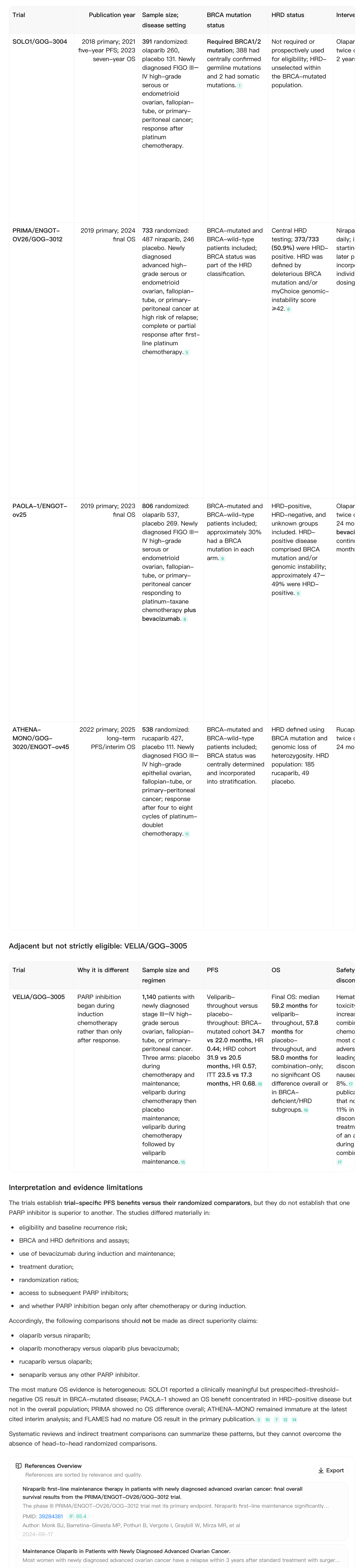
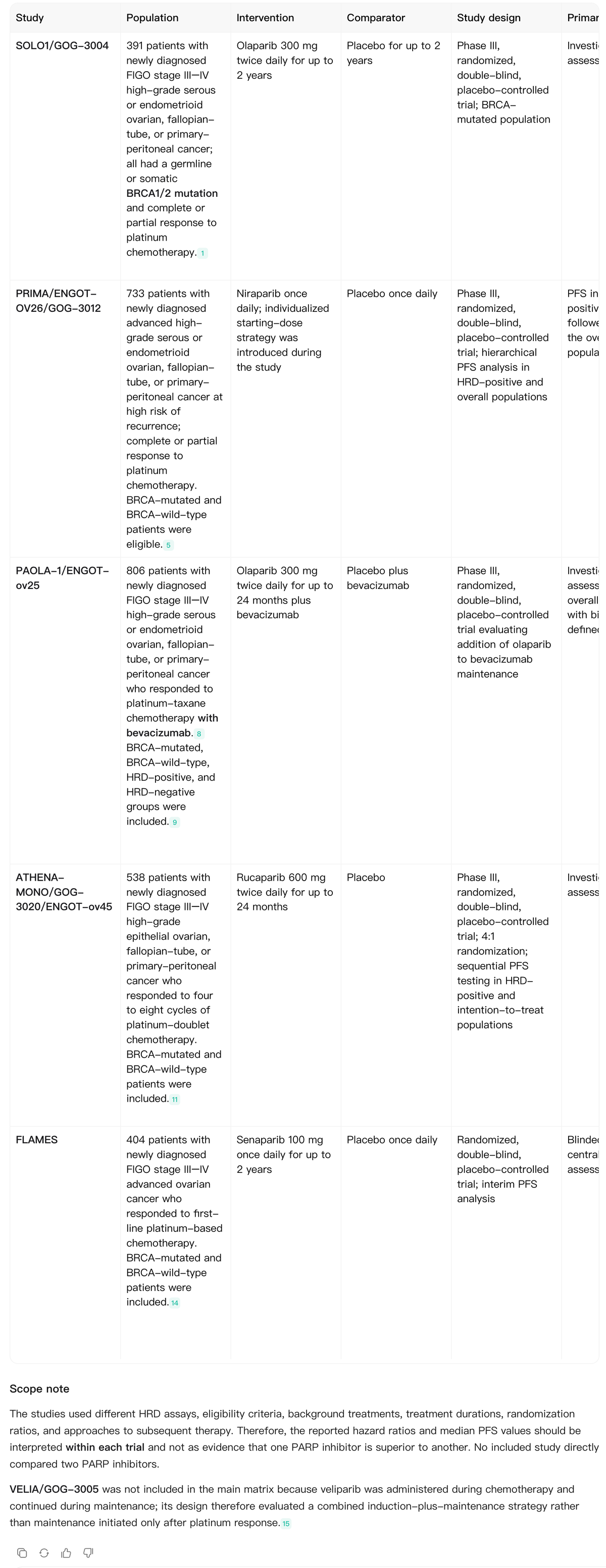
The important advantage is not simply that multiple papers appear in one table. The comparison framework makes differences visible before they are turned into a conclusion.
For biomedical research, this is especially important because apparently similar studies can differ substantially in eligibility criteria, endpoint definitions, analysis populations, treatment schedules, follow-up maturity, and reporting conventions.
FREE ACCESS — Try Noah AI Free
Start with free credits to search, compare, and analyze biomedical evidence with AI. No credit card required.
Start Free with Free Credits →
Important limitation: Noah's output should be treated as a research aid rather than a substitute for the review team's formal methodology. Key numerical results, endpoint definitions, eligibility criteria, and methodological conclusions should still be checked against the original sources.
Which Tool Fits Which Part of the Workflow?
| If Your Main Problem Is... | Start With... | Why |
|---|---|---|
| Formal review management | Covidence | Strong workflow for screening, extraction, quality assessment, and collaboration. |
| Collaborative screening | Rayyan | Strong reviewer controls, screening decisions, and conflict handling. |
| Open-source active learning | ASReview | Prioritizes records through an active-learning screening workflow. |
| AI-assisted systematic review | Elicit | Connects search, screening, extraction, and synthesis. |
| Biomedical evidence comparison | Noah AI | Strong fit for structured medical evidence analysis, study comparison, and cited synthesis. |
Building a Systematic Review Tool Stack
In many projects, using several specialized tools is more practical than forcing one platform to handle every stage.
Budget-Oriented Stack
- Search using the relevant biomedical and academic databases.
- Screen with Rayyan or ASReview.
- Use Elicit for structured extraction where appropriate.
- Use Noah AI for biomedical evidence comparison and synthesis when the final paper set is defined.
- Use a reference manager such as Zotero for reference organization.
Managed Academic Stack
- Define the protocol and search strategy.
- Run database searches and document the search process.
- Use Covidence or Rayyan for screening and reviewer coordination.
- Use Covidence or Elicit for structured extraction.
- Perform appropriate quality or risk-of-bias assessment.
- Use Noah AI as an additional biomedical evidence-synthesis layer when cross-study interpretation is needed.
- Document every AI-assisted step in the review methodology.
Do not add tools just because they have AI features. Every additional handoff creates another place where records, labels, extraction fields, or source information can be lost. Add a tool only when it solves a real bottleneck.
PRISMA Workflow With AI Integration
PRISMA 2020 is a reporting guideline for systematic reviews. It does not mean that using software automatically makes a review PRISMA-compliant. The review team still needs to document how records were identified, screened, included, and analyzed.
A practical division of labor is to use dedicated review software for the formal screening and decision trail, while using AI research tools to accelerate extraction, comparison, and synthesis.
The review team should still decide which studies are eligible, how methodological quality is assessed, what evidence is sufficiently comparable, and what conclusions are justified.
Common AI Systematic Review Mistakes
Mistake 1: Relying Only on AI Screening — AI screening can prioritize records, but it can also make incorrect decisions. A relevant paper that is incorrectly excluded may affect the entire review. Use predefined criteria, retain reviewer oversight, and validate the screening workflow before scaling it to a large dataset.
Mistake 2: Failing to Document AI Use — Record which AI tools were used, what tasks they performed, which settings or models were used where relevant, and how AI-generated decisions or outputs were verified. Current PRISMA guidance explicitly addresses reporting the use of automation tools in selection and data-collection processes.
Mistake 3: Accepting AI Extraction Without Verification — Extraction errors can be especially dangerous because a table can look highly structured while containing an incorrect denominator, endpoint definition, time point, or effect estimate. Recheck important numerical fields against the original paper, especially primary outcomes, sample sizes, confidence intervals, and follow-up periods.
Mistake 4: Treating AI Synthesis as the Final Conclusion — AI can identify recurring themes and summarize differences between studies. It should not independently determine whether evidence is sufficiently strong to support a clinical or methodological conclusion. The researcher still needs to assess study quality, consistency, applicability, uncertainty, and the limitations of the evidence.
Mistake 5: Comparing Headline Numbers Without Comparing Methods — A lower hazard ratio or higher response rate in one trial does not automatically demonstrate that the corresponding intervention is superior to the intervention tested in another trial. Before comparing numerical results, check population eligibility, comparator, endpoint definitions, analysis populations, follow-up maturity, and statistical design.
Review Team Setup Guide
Pricing Models and Operational Support
Pricing and plan information last checked: November 3, 2026. Pricing and feature availability were reviewed against publicly available vendor information. Subscription costs may vary by billing cycle, institution, region, and plan. Readers should verify current pricing and included features on each provider's official website before purchasing.
| Model | Tools | Best Fit | Main Risk |
|---|---|---|---|
| Free / open source | ASReview | Researchers who can manage setup themselves | Team owns technical setup and support |
| Free / paid tiers | Rayyan, Elicit, Noah AI | Solo researchers and small academic teams | Usage limits may affect longer workflows |
| Institutional / paid review platform | Covidence | Labs, libraries, and structured review teams | Access may depend on institutional licensing |
Before starting a long review, test the actual export paths you expect to use. Do not assume that because a platform displays a field, that field will necessarily transfer cleanly to the next tool.
Quick Start and Troubleshooting
- Define the research question and inclusion / exclusion criteria.
- Document the intended databases and search strategy.
- Export references in a stable format such as RIS or CSV where appropriate.
- Import the records into the selected screening platform.
- Screen an initial set manually before relying heavily on AI prioritization.
- Lock the extraction fields before large-scale extraction begins.
- Export the included evidence set and verify important source identifiers.
- Use AI tools for structured extraction and cross-paper synthesis where appropriate.
- Verify important results against primary sources.
- Record how AI was used in the review methodology.
Common problems are often workflow problems rather than model problems. If the imported dataset is incomplete, the AI cannot compensate for missing records. If extraction fields change halfway through the review, later rows may no longer be comparable. If the source trail disappears during export, the final synthesis becomes harder to audit.
Installation and Configuration Checks
Before committing to a tool stack, check the operational details that are easy to ignore during a product demo.
- Installation path: browser, desktop, local environment, or institution-managed system.
- Settings owner: identify who controls eligibility criteria, reviewer roles, extraction fields, and workflow rules.
- Data sources: record which databases and external sources feed the review.
- Output files: test RIS, CSV, spreadsheet, PDF, labels, notes, and exclusion-reason exports.
- Data location: know where references, PDFs, AI processing, and audit copies are stored.
- Multi-project separation: keep different reviews from sharing inconsistent labels or extraction fields.
- Support: identify who handles technical or account issues.
- Licensing: confirm what happens if an institutional subscription ends or a reviewer leaves the project.
Red flag: a tool should not be judged only by how impressive the AI output looks. A stronger test is whether the team can explain where the evidence came from, what decisions were made, which settings were used, and how the final conclusion can be traced back to the underlying studies.
Target Industries and Use Cases
| Setting | Typical Use Case | Potential Stack |
|---|---|---|
| Academic lab | Thesis, grant, or focused systematic review | Rayyan or ASReview + Elicit / Noah AI |
| Clinical research team | Evidence review and clinical literature synthesis | Covidence + appropriate evidence-analysis tools |
| Biomedical research | Trial comparison and evidence synthesis | Screening platform + Noah AI |
| Public health | Evidence mapping and rapid review | Rayyan / Elicit + source verification |
| Solo researcher | Focused review or scoping project | ASReview / Elicit / Noah AI depending on task |
Higher-stakes reviews generally require stronger documentation and reviewer controls. Lower-risk exploratory work may tolerate a lighter tool stack, provided the source trail and methodological decisions remain clear.
Validation and Impact Checks
Do not evaluate an AI review tool only by how quickly it produces an answer. Test whether the speed comes without unacceptable losses in recall, extraction accuracy, or traceability.
| Check | How to Run It | Pass Signal |
|---|---|---|
| Screening recall | Manually inspect a validation sample after AI prioritization. | No obvious pattern of missed relevant records. |
| Data extraction | Recheck a predefined sample of extracted fields against the papers. | Important outcomes and denominators match the source. |
| Bias / QA | Compare AI-assisted suggestions with reviewer assessments. | Disagreements are visible and resolved through the review process. |
| Audit trail | Export decisions, labels, notes, and source information. | Another reviewer can understand how the evidence moved through the workflow. |
This validation step is more useful than a generic claim that a tool is "faster." A useful tool is one that reduces repetitive work while keeping important errors visible.
PICO, Bias, and File-Format Fit
PICO refers to Population, Intervention, Comparison, and Outcome. It is a useful framework for structuring many evidence questions, but the review team still needs to define exactly what each element means for the project.
| Need | Stronger Fit | Watch Out |
|---|---|---|
| PICO fields | Covidence, Elicit, Noah AI | The researcher must define the actual inclusion criteria. |
| Risk of bias | Covidence and dedicated appraisal workflows | AI extraction is not the same as formal risk-of-bias assessment. |
| File import | Rayyan, Covidence, ASReview | Test the exact citation format before starting the full workflow. |
| Full-text evidence | Elicit and Noah AI can support document-level research tasks | Access, copyright, and vendor data terms still matter. |
| Biomedical synthesis | Noah AI | Do not convert structured AI output into a final clinical conclusion without source verification. |
This is why "all-in-one" is not necessarily the objective. A good workflow keeps the question, inclusion criteria, reviewer decisions, extraction fields, source documents, and final synthesis connected.
Final Recommendation for AI Systematic Review Tools
If you are starting an AI-assisted systematic review, choose the tool based on the phase that creates the biggest bottleneck.
- Start with the methodology. Define the research question, eligibility criteria, outcomes, search strategy, and review process before choosing software.
- Choose the screening layer. Use Covidence, Rayyan, or ASReview when screening and reviewer decision management are the central problem.
- Add Elicit when systematic-review automation is important. Its current workflow connects searching, screening, extraction, and synthesis.
- Add Noah AI when biomedical evidence synthesis becomes the bottleneck. Use it to organize study-level evidence, compare clinical or biomedical studies, build structured evidence tables, and synthesize findings with source traceability.
- Document every AI-assisted step. Record what the tool did, what the researcher did, and how important outputs were verified.
The most practical conclusion is therefore not that one tool "wins." Covidence is stronger as a managed review environment. Rayyan is strong for collaborative screening. ASReview is useful for open-source active learning. Elicit is increasingly capable as a dedicated AI-assisted systematic-review workflow. Noah AI is differentiated by biomedical research analysis, cross-paper evidence comparison, and cited synthesis.
If the review is already screened and the problem is understanding what the included studies collectively show, Noah AI becomes more relevant because the task has moved from "Which papers should we include?" to "What does this evidence set actually tell us?"
FREE CREDITS INCLUDED — Turn Biomedical Evidence Into a Structured Review
Use Noah AI to search, compare, extract, and synthesize biomedical evidence with free credits. No credit card required.
Frequently Asked Questions
Can AI fully automate a systematic review?
No. AI can assist with searching, screening, extraction, organization, and synthesis, but a formal systematic review still requires a defined methodology, researcher-controlled eligibility decisions, appropriate quality assessment, source verification, and transparent reporting.
Which AI tool is best for systematic reviews in 2026?
There is no universal winner. Covidence is a strong fit for managed systematic-review workflows, Rayyan for collaborative screening, ASReview for open-source active learning, Elicit for AI-assisted systematic-review workflows, and Noah AI for biomedical evidence comparison and synthesis.
Is Noah AI a systematic-review platform?
Noah AI should not be treated as a replacement for dedicated systematic-review management software when the project requires formal reviewer screening, conflict resolution, or a dedicated risk-of-bias workflow. Its stronger role is biomedical evidence retrieval, structured extraction, cross-paper comparison, and cited synthesis.
Can Noah AI compare multiple clinical studies?
Yes. Noah can organize multiple biomedical studies into common comparison fields and help synthesize the evidence. Researchers should still distinguish descriptive cross-study comparison from a true head-to-head comparison and verify important claims against the original publications.
Can AI extract data from research papers?
Yes. Tools such as Elicit and Noah AI can support structured extraction, but extracted values should be checked against the source, especially when the field involves numerical outcomes, denominators, endpoint definitions, or analysis populations.
Should I use one comprehensive tool or several tools?
Use one tool when it genuinely covers the workflow you need. A multi-tool stack can be stronger when each tool solves a different bottleneck, but every additional handoff creates opportunities for lost records, inconsistent fields, or missing source information.
How much time can AI save in a systematic review?
The amount varies substantially by review size, database volume, screening criteria, document accessibility, and how much of the process is automated. Speed should be evaluated together with screening recall, extraction accuracy, and auditability rather than treated as the only performance metric.
Should AI-generated citations be verified?
Yes. Citation presence does not by itself prove that a source supports a claim. Important clinical or scientific claims should be checked against the original paper, trial record, regulatory source, or other authoritative source.
Final Takeaway
The best AI systematic-review workflow is not necessarily the one with the most automation.
A strong review process keeps methodological decisions visible, preserves reviewer control, maintains consistent extraction fields, and allows important findings to be traced back to their sources.
Covidence is the strongest choice for structured review management.
Rayyan is well suited to collaborative screening.
ASReview is useful when open-source active learning is the priority.
Elicit is increasingly suitable for AI-assisted systematic-review workflows.
Noah AI is most differentiated when the problem is biomedical evidence analysis: comparing studies, organizing evidence into structured tables, identifying methodological differences, and producing a cited synthesis.
The practical rule is simple: choose the screening and review-management system first, then add AI research tools where they solve a specific evidence-analysis bottleneck.