
Best Anara Alternatives for Source-Grounded Medical Research (2026)
Linda
Compare the best Anara alternatives for source-grounded medical research, including Noah AI, Elicit, Consensus, Scite, and ChatGPT.
Looking for an Anara alternative for medical literature research? We compare Noah AI, Elicit, Consensus, Scite, and general-purpose research tools for source-grounded literature search, study comparison, evidence extraction, and citation verification.
Quick answer
For medical and life-science research that requires structured evidence extraction, cross-study comparison, and claim-to-source verification, Noah AI is a relevant Anara alternative. However, citation availability alone does not establish that a conclusion is evidence-grounded; researchers must verify that the cited studies support the exact claims made. Elicit is particularly useful for systematic review workflows, Consensus is useful for fast evidence discovery and synthesis, and Scite is especially useful when you need to understand how later publications support, contrast, or mention a study.
What Is Anara?
Anara is an AI research workspace designed to help researchers search, read, organize, and synthesize scientific literature. Its workflow is centered on working with research sources rather than treating AI as a standalone chatbot.
That makes Anara useful for researchers who need to move from literature discovery to source-backed synthesis. But different research questions require different levels of structure. A researcher looking for a broad overview may need a search-focused tool, while a medical researcher comparing clinical studies may need explicit study-level extraction and claim-to-source verification.
That is where Anara alternatives become useful. Instead of asking which tool is universally better, the more practical question is: Which tool best fits the evidence workflow you actually need?
Testing note: We tested Noah AI directly using a biomedical research question about SGLT2 inhibitors and kidney outcomes in chronic kidney disease. The comparisons with Anara, Elicit, Consensus, and Scite are based on publicly documented product features, not equivalent hands-on testing. This article compares workflow suitability rather than independently measured accuracy or performance.
Best Anara Alternatives in 2026
| Tool | Best for | Main strength | Best fit for medical research |
|---|---|---|---|
| Noah AI | Evidence-grounded medical research | Structured evidence synthesis and claim verification | Clinical evidence, biomedical research, study comparison |
| Anara | General scientific research workspace | Research agent, source library, cited synthesis | Broad academic and scientific research |
| Elicit | Systematic literature reviews | Screening and structured data extraction | Systematic reviews and evidence synthesis |
| Consensus | Fast evidence discovery | Natural-language academic search and cited summaries | Quick medical evidence exploration |
| Scite | Citation context | Supporting, contrasting, and mentioning citation signals | Checking how research has been cited |
| ChatGPT Deep Research | Flexible research tasks | Broad research and synthesis | Exploratory research across multiple source types |
1. Noah AI — Best Anara Alternative for Source-Grounded Medical Research
Noah AI is the strongest fit in this comparison when the research task requires more than finding papers. The workflow can be structured around a defined research population, intervention, comparator, outcomes, evidence cutoff, and prioritized study types.
This distinction matters in medical literature reviews. A useful evidence synthesis should not simply produce a list of papers. It should make clear which studies were included, what populations they studied, what interventions and comparators were used, what outcomes were measured, and which conclusions are directly supported by the evidence.
Step 1: Define the research scope before reviewing studies
For our test, the research question focused on SGLT2 inhibitors and kidney outcomes in adults with chronic kidney disease. The research scope specified the population, interventions, comparator, outcomes, evidence cutoff, and preferred study types.
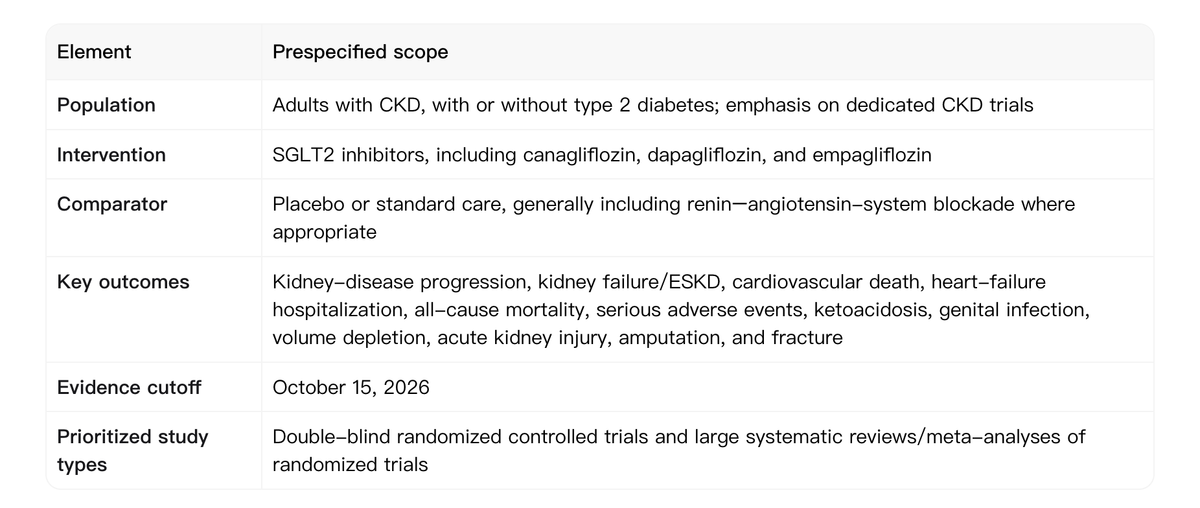
This step prevents the review from becoming an overly broad summary. It also creates a clear boundary for what should count as relevant evidence.
Step 2: Compare studies at the study level
After defining the scope, the next useful output is a structured comparison of the major studies. Instead of discussing each paper separately in long paragraphs, the evidence can be organized around study design, intervention, population, sample size, comparator, and primary endpoint.
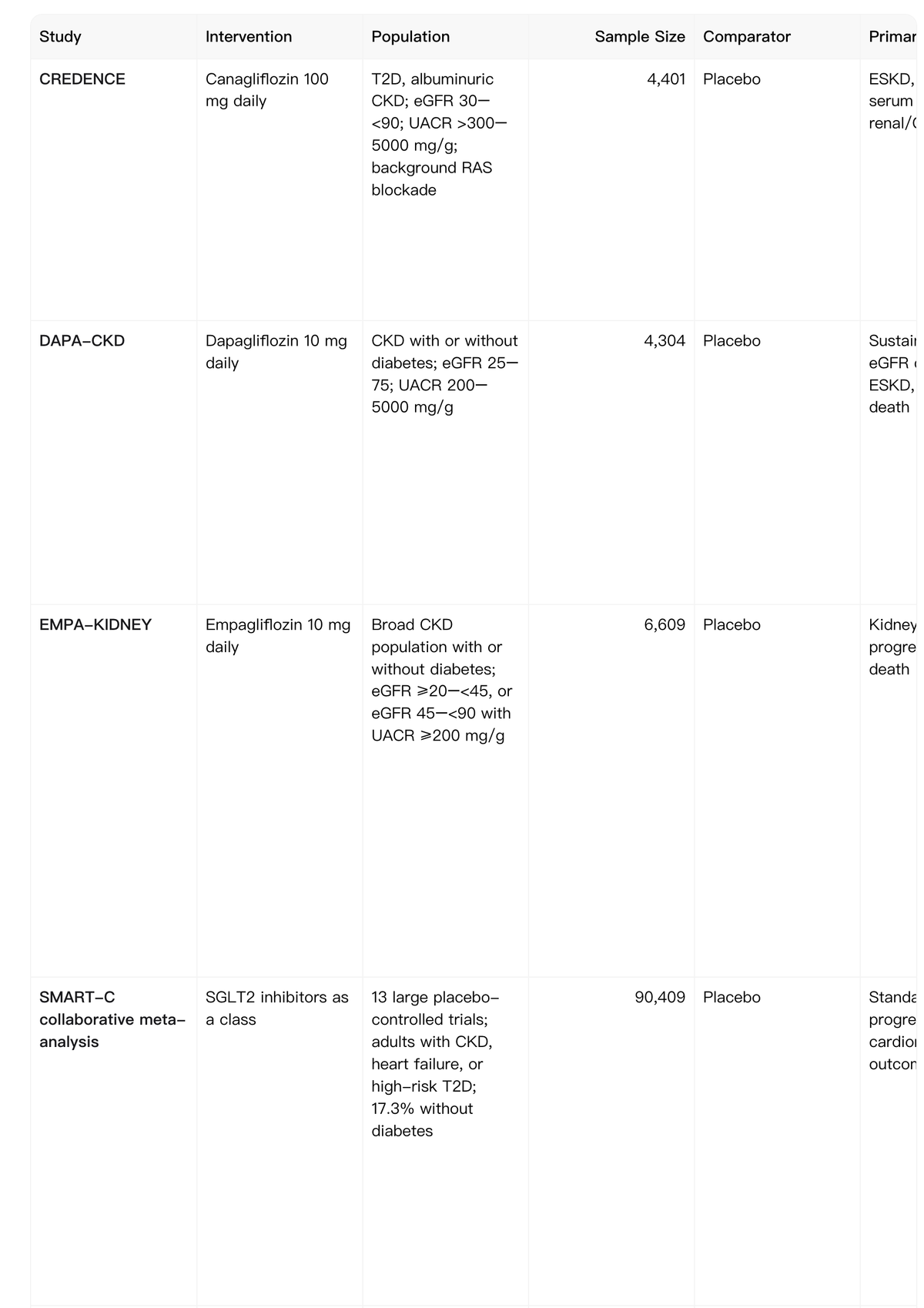
A study-level table is especially useful when trials differ in population, eligibility criteria, follow-up duration, baseline risk, or endpoint definitions. Those differences can materially affect how apparently similar results should be interpreted.
Step 3: Trace clinical claims back to their sources
The final step is different from simply listing references. A medical literature review needs to show which source supports each important conclusion and whether the reported result actually justifies the wording of the claim.
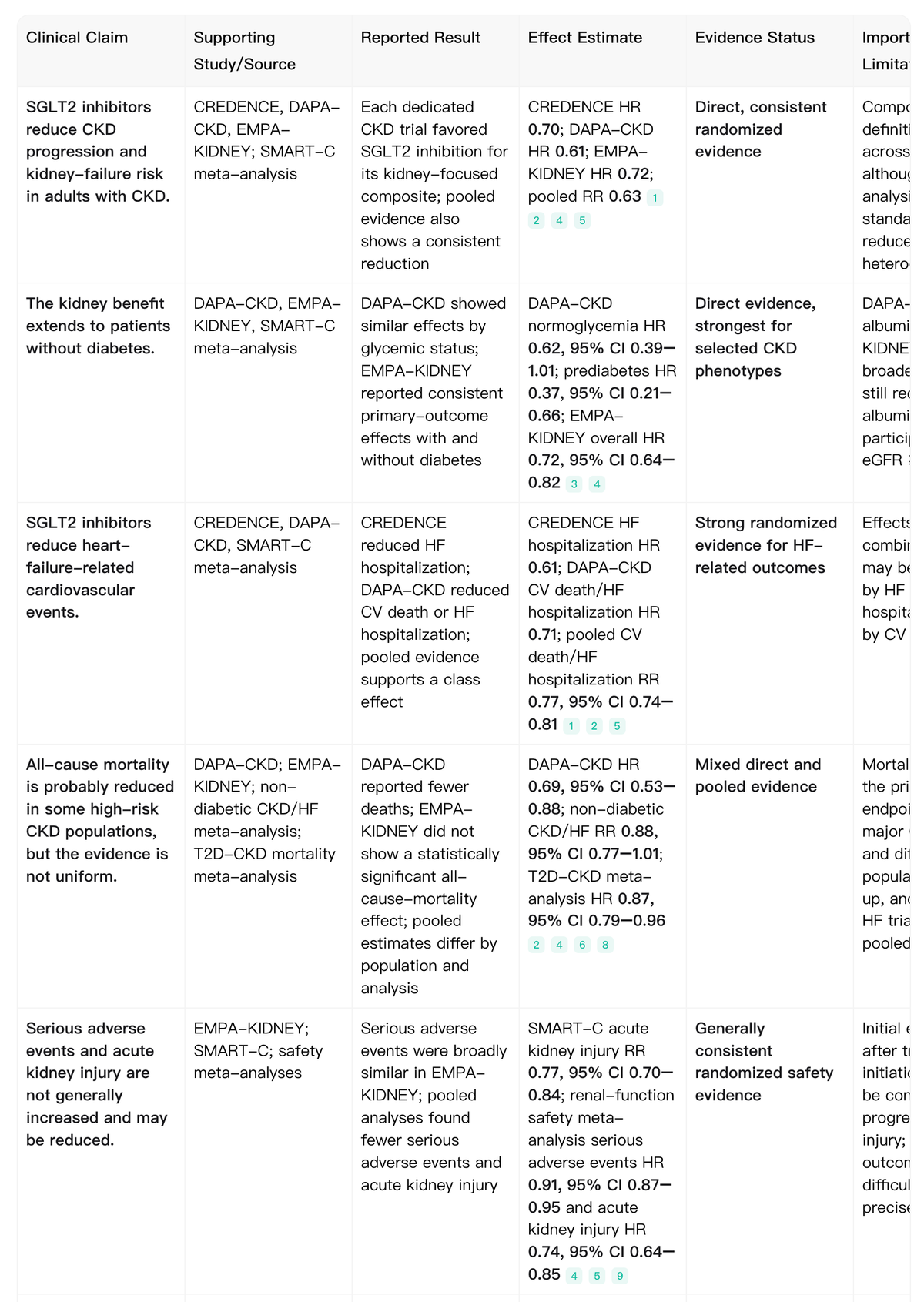
This is important because a citation alone does not guarantee that the source supports the exact wording of a conclusion. For example, a trial may support a reduction in a composite kidney endpoint without proving a benefit for every individual component of that endpoint.
The evidence map therefore adds another layer of review: not only "What did the paper report?", but also "How far can this evidence support the claim?"
How Noah AI Compares With Anara
Anara and Noah AI overlap in an important area: both are designed to help researchers work with scientific evidence rather than relying only on general-purpose AI responses.
The more meaningful difference is workflow emphasis. Anara is positioned as a broad scientific research workspace that combines literature search, source management, research conversations, and cited outputs. Noah AI can be particularly useful when the task is framed as a medical evidence-analysis problem with explicit research criteria and structured outputs.
Choose Anara if:
- You want a broad scientific research workspace.
- You work across papers, notes, files, and multiple research sources.
- You want a general research agent that can support several types of scientific tasks.
Choose Noah AI if:
- Your main task is medical or life-science evidence analysis.
- You need to compare clinical studies using consistent fields.
- You need to separate study-level results from broader class-level conclusions.
- You want important clinical claims connected to supporting sources.
- You need an evidence cutoff and explicit interpretation boundaries.
2. Elicit — Best for Systematic Review Workflows
Elicit is a strong alternative when the primary requirement is a systematic literature review workflow. Its current workflow emphasizes research-question refinement, literature gathering, screening, data extraction, and evidence synthesis.
This makes Elicit particularly relevant when the review requires explicit inclusion and exclusion criteria and a large number of papers need to be screened or extracted consistently.
The trade-off is that a systematic-review workflow is not necessarily the same as a medical evidence-analysis workflow. If the main goal is to build a clinically structured synthesis around specific endpoints, populations, effect estimates, and interpretation boundaries, the output structure becomes just as important as the screening process.
3. Consensus — Best for Fast Medical Evidence Discovery
Consensus is useful when the first question is simply: "What does the published research say about this?" It combines academic search with AI-generated summaries and citations, making it convenient for quickly exploring a medical question and identifying relevant papers.
It is a good option for early-stage evidence discovery, especially when you want to narrow a broad question before performing a deeper review.
For a detailed evidence synthesis, however, researchers may still need a separate structured process for defining eligibility, extracting comparable study fields, and checking whether each final claim is supported by the underlying evidence.
4. Scite — Best for Understanding Citation Context
Scite addresses a different problem. Instead of focusing primarily on extracting a complete evidence table, its Smart Citations are designed to show how later publications cite a study, including whether the citation provides supporting, contrasting, or mentioning context.
This can be valuable when you already have an important paper and want to understand how the wider literature has responded to it.
Scite is therefore particularly useful for citation verification and literature context. It is not necessarily a replacement for a full medical evidence-extraction workflow.
Which Anara Alternative Should You Choose?
| Your task | Best fit |
|---|---|
| Structured medical evidence synthesis | Noah AI |
| Broad scientific research workspace | Anara |
| Systematic review screening and extraction | Elicit |
| Fast medical literature discovery | Consensus |
| Checking how studies are cited | Scite |
| Flexible general research | ChatGPT Deep Research |
What to Look for in a Source-Grounded Medical Research Tool
The most important feature is not simply whether an AI tool can produce citations. A useful medical research workflow should make the relationship between the question, evidence, and conclusion easy to inspect.
- Defined research scope: The population, intervention, comparator, outcomes, and evidence cutoff should be explicit.
- Study-level extraction: Important trials should be compared using consistent fields rather than summarized independently.
- Source traceability: Major claims should be connected to the studies or sources supporting them.
- Interpretation boundaries: The output should distinguish what the evidence demonstrates from what it does not demonstrate.
- Evidence synthesis: The final conclusion should consider differences between populations, endpoints, interventions, and study designs.
Frequently Asked Questions
What is the best Anara alternative for medical research?
There is no universal best alternative. For structured medical evidence synthesis, Noah AI is a strong fit. Elicit is particularly relevant for systematic reviews, Consensus for rapid evidence discovery, and Scite for citation-context analysis.
Is Noah AI an alternative to Anara?
Yes. The two tools overlap in source-grounded scientific research, but their workflows can differ. Noah AI is particularly suited to medical and life-science evidence analysis where study comparison, evidence extraction, and claim verification are central.
Is Elicit better than Anara for systematic reviews?
Elicit is specifically strong for systematic-review workflows involving screening and structured extraction. Whether it is better depends on whether the project prioritizes formal review workflow control or broader research-agent capabilities.
Is Scite an alternative to Anara?
It can be, but the tools solve somewhat different problems. Scite is particularly useful for understanding citation context and whether later literature supports or contrasts with previous findings. It is less directly focused on building a complete medical evidence synthesis.
Can AI replace a medical literature review?
No. AI can accelerate search, screening, extraction, comparison, and synthesis, but researchers should still verify important claims against the original papers. A structured AI output should be treated as a research aid, not as a substitute for source verification.
Build a Source-Grounded Medical Research Workflow
Use Noah AI to search, compare, and analyze biomedical evidence with structured research workflows.
For a more focused comparison of their literature-review workflows, read Noah AI vs Anara for Cited Biomedical Literature Reviews (2026).