
How to Compare Heart Failure Trials with AI: DAPA-HF, EMPEROR-Reduced & DELIVER
Linda
Compare DAPA-HF, EMPEROR-Reduced, and DELIVER with AI. Explore heart failure trial populations, clinical endpoints, outcomes, and evidence limitations using Noah AI.
Comparing heart failure trials requires more than reviewing their reported treatment effects. DAPA-HF, EMPEROR-Reduced, and DELIVER evaluated SGLT2 inhibitors in different heart failure populations, with important differences in eligibility criteria, clinical endpoints, and follow-up.
In this example, we use Noah AI to compare the three randomized trials, build a structured clinical evidence table, identify methodological differences, and organize the findings into a literature review draft. The goal is to understand the evidence across trials—not to rank dapagliflozin against empagliflozin using indirect comparisons.
In this workflow, we analyze three heart failure trials:
- DAPA-HF
- EMPEROR-Reduced
- DELIVER
Step 1: Define the Research Question
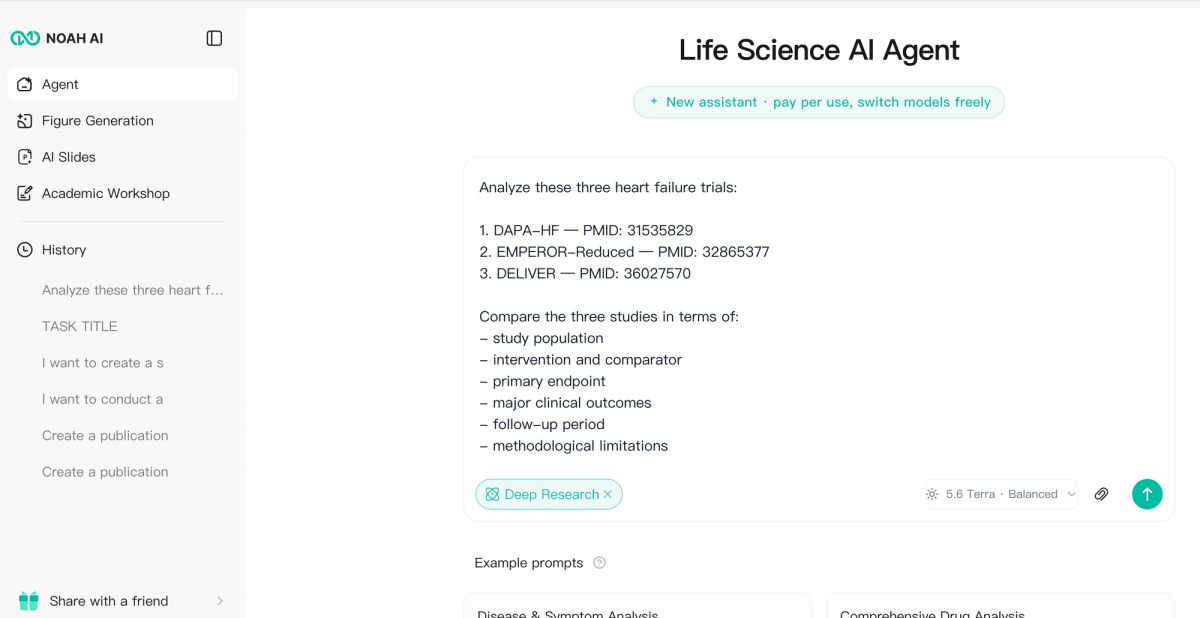
Start with a specific question rather than asking for three independent paper summaries. In this example, the goal is to compare the three trials by study population, intervention, comparator, primary endpoint, clinical outcomes, follow-up, and methodological limitations.
Example prompt:
Analyze these three heart failure trials:
- DAPA-HF — PMID: 31535829
- EMPEROR-Reduced — PMID: 32865377
- DELIVER — PMID: 36027570
Compare the three studies in terms of:
- study population
- intervention and comparator
- primary endpoint
- major clinical outcomes
- follow-up period
- methodological limitations
Preserve study-specific differences and do not treat the trials as a head-to-head comparison.
Step 2: Compare the Three Papers
Ask Noah to organize the extracted evidence into a cross-paper comparison. This makes differences in populations, endpoints, sample sizes, follow-up, and reported outcomes visible in one place.
The comparison shows that DAPA-HF and EMPEROR-Reduced studied patients with LVEF ≤40%, whereas DELIVER evaluated patients with LVEF >40%. It also highlights differences in endpoint definitions and follow-up.
Important: DAPA-HF and EMPEROR-Reduced enrolled patients with LVEF ≤40%, while DELIVER enrolled patients with LVEF >40%. Their eligibility criteria, endpoint definitions, and follow-up periods also differed. Neither raw event rates nor hazard ratios should be used to rank dapagliflozin against empagliflozin. These were separate placebo-controlled trials, not direct head-to-head comparisons.
Step 3: Build a Literature Review Matrix
A comparison table summarizes individual studies. A literature review matrix organizes the evidence around broader themes, making it easier to see what multiple papers support and where important limitations remain.
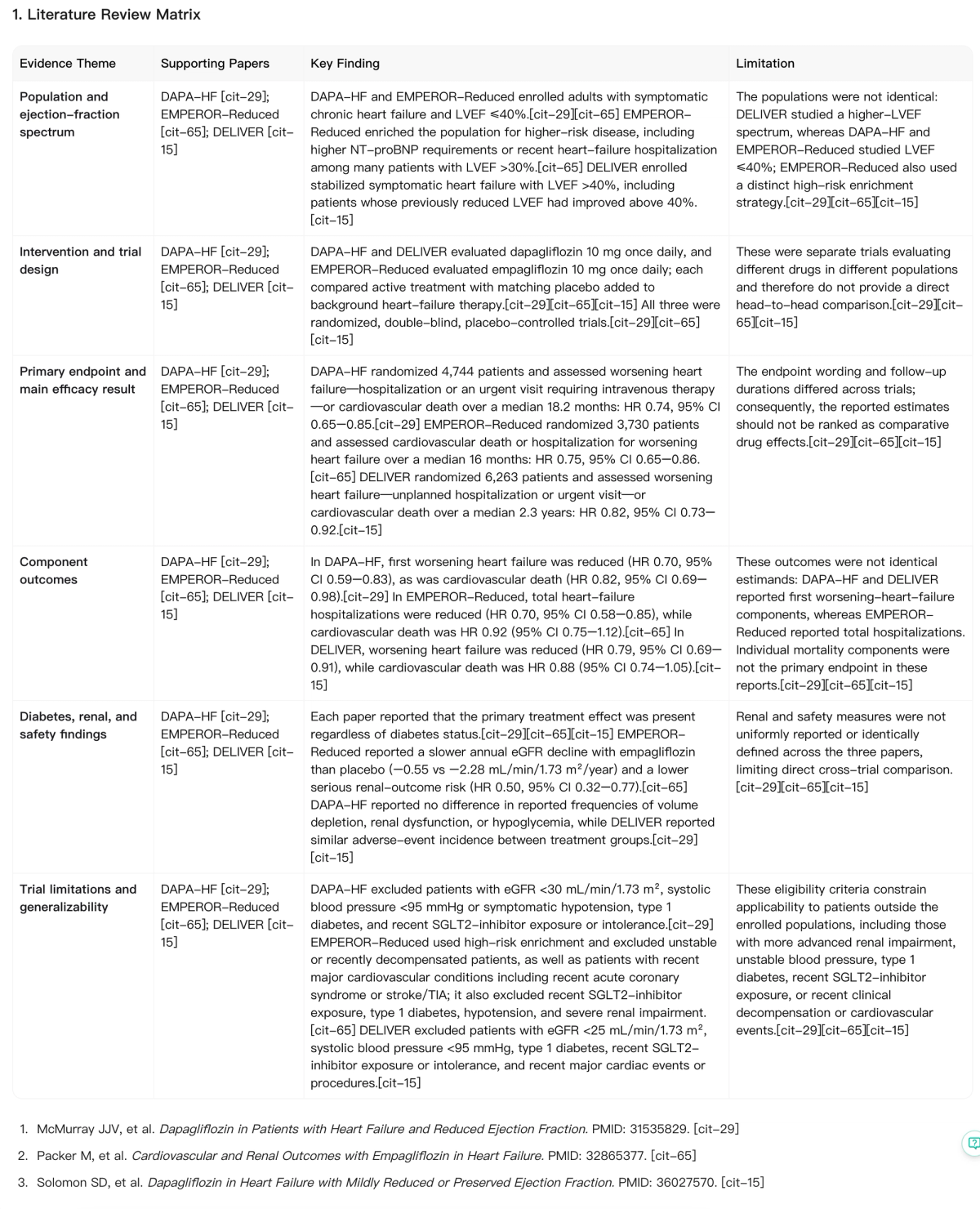
This structure is useful for identifying shared findings while keeping study-specific limitations visible. It can also serve as a working evidence table when preparing a literature review.
Step 4: Turn Extracted Evidence into a Literature Review Draft
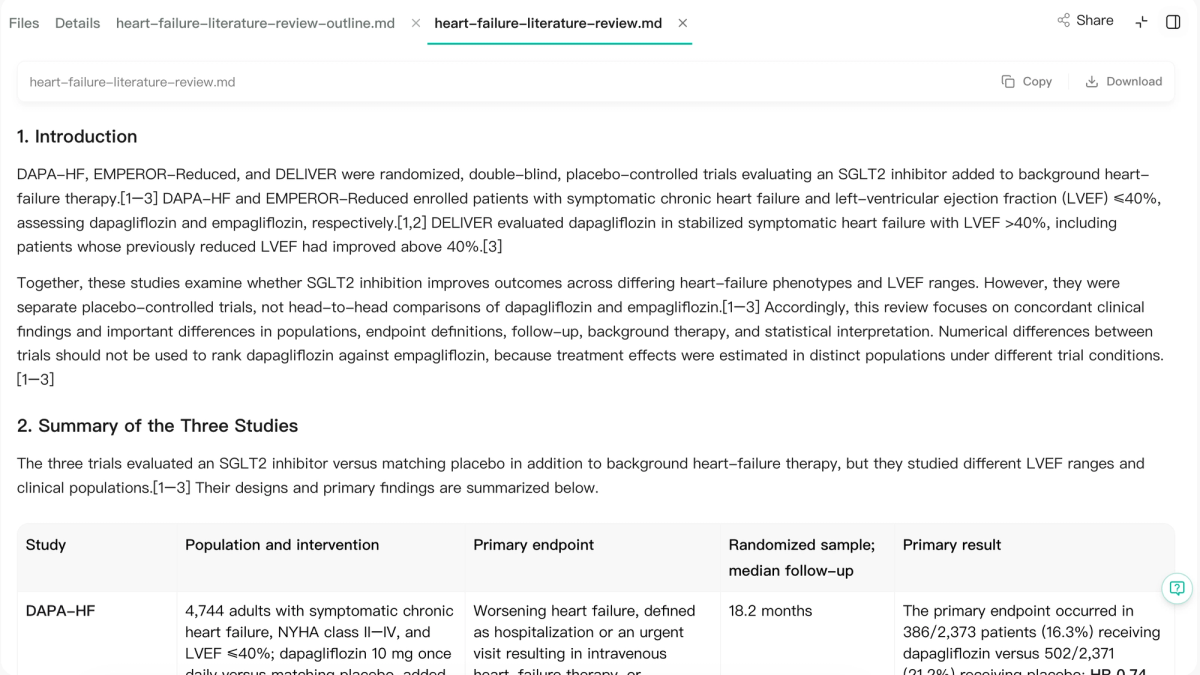
Once the evidence has been organized, continue the conversation and ask Noah to turn the extracted findings into a structured literature review draft.
Example follow-up prompt:
Example follow-up prompt:Using the evidence extracted from DAPA-HF, EMPEROR-Reduced, and DELIVER, write a concise literature review draft.Structure it into:
- Introduction
- Summary of the Three Studies
- Shared Clinical Findings
- Important Methodological Differences
- Limitations of Cross-Trial Comparison
- Conclusion
Use only evidence supported by the three papers. Do not rank dapagliflozin versus empagliflozin because these were not head-to-head trials.
What Can We Learn from Comparing These Three Heart Failure Trials?
- Compare studies faster: Bring key study characteristics into one structured view.
- Different patient populations: DAPA-HF and EMPEROR-Reduced focused on reduced ejection fraction, while DELIVER included patients with LVEF >40%.
- Different endpoint definitions: The trials did not use identical definitions of worsening heart failure and hospitalization.
- Clinical evidence across populations: The findings help researchers examine SGLT2 inhibitor evidence across different heart failure settings without assuming direct drug superiority.
- Limits of cross-trial comparison: Differences in baseline risk, eligibility, follow-up, and study design must be considered before interpreting effect estimates.
Verify the Original Sources
AI-assisted analysis can accelerate evidence organization, but important findings should still be checked against the original papers before academic or scientific use. In particular, verify eligibility criteria, subgroup denominators, endpoint definitions, follow-up, and methodological details in the full text when these details matter to your conclusion.
Analyze Multiple Research Papers with Noah AI
Try Noah AI Free — Get free credits to search, compare, and synthesize biomedical literature with AI. No credit card required.