
Noah AI vs Scite for Evidence-Grounded Literature Reviews (2026)
Linda
Compare Noah AI vs Scite for evidence-grounded literature reviews, including citation analysis, evidence synthesis, source traceability, and research workflows.
Noah AI and Scite both help researchers work with scientific literature, but they solve different parts of the evidence-review workflow. This comparison looks at how they approach literature discovery, citation evidence, cross-study synthesis, and source traceability.
Finding papers is only one part of a literature review. Researchers also need to understand what those papers actually show, compare findings across studies, identify limitations, and trace important conclusions back to their sources.
This is where Noah AI and Scite take somewhat different approaches. Scite is particularly focused on citation intelligence: understanding how later publications cite and discuss a study. Noah AI is designed around biomedical research workflows, where a research question can be developed into a structured report containing synthesized findings, evidence tables, and source-traceable claims.
Comparison disclosure: This article demonstrates Noah AI using a biomedical research question about GLP-1 receptor agonists and cardiovascular outcomes in type 2 diabetes. Scite's capabilities are described based on publicly documented product features, not a hands-on test using the same research question. This is a comparison of research workflows, not a controlled benchmark of accuracy, completeness, or performance.
Noah AI vs Scite at a Glance
| Capability | Noah AI | Scite |
|---|---|---|
| Primary focus | Biomedical and life-science research workflows | Scientific literature discovery and citation intelligence |
| Literature discovery | Research-question-driven biomedical discovery | Search across scientific literature and citation statements |
| Citation context | Links claims and evidence to identifiable sources | Smart Citations classify citation statements as supporting, contrasting, or mentioning |
| Cross-study synthesis | Designed to synthesize multiple biomedical studies into a report | Can compare and synthesize literature through Assistant and structured workflows |
| Evidence tables | Structured trial-level and claim-to-source evidence tables | Table Mode can help organize information from selected sources |
| Best fit | Biomedical evidence synthesis and cited research reports | Citation analysis, literature discovery, and checking how findings are supported or challenged |
1. Noah AI: From a Biomedical Question to Structured Evidence
Noah AI's workflow starts with the research question rather than with a single paper. In this example, the task asks for a literature review of cardiovascular outcomes associated with GLP-1 receptor agonists in adults with type 2 diabetes.
The research question specifies the population, intervention, comparison, outcomes, and an evidence cutoff date. This gives the research task a defined scope before the evidence synthesis begins.
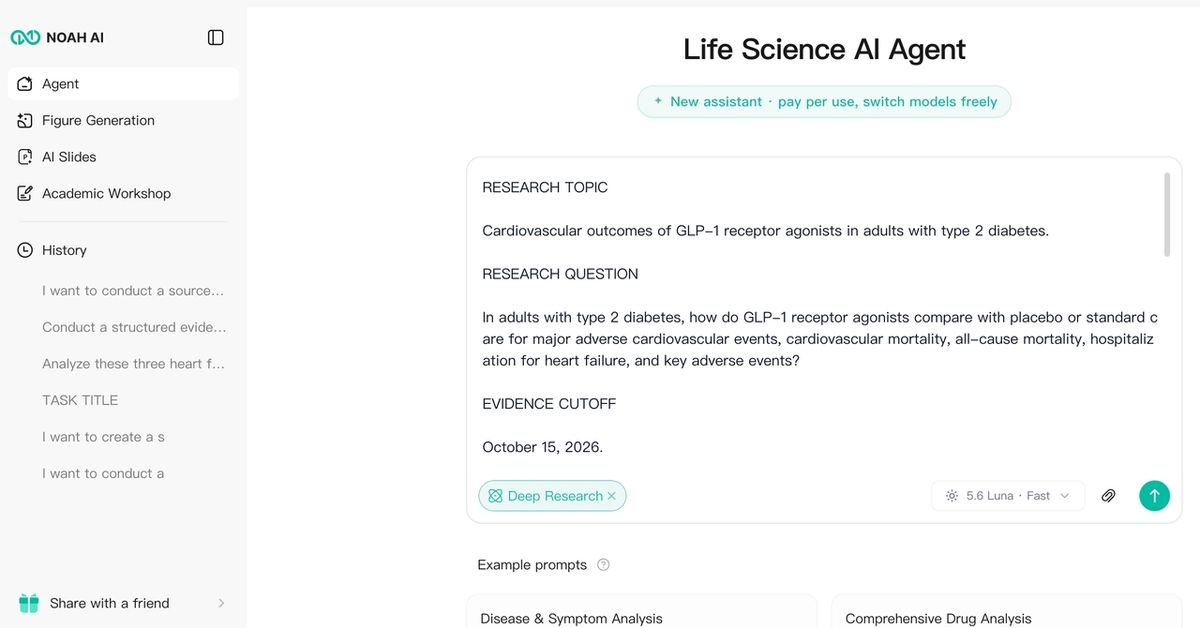
This is an important distinction in practice. A literature review is not simply a search for papers containing a keyword. The usefulness of the final output depends on whether the retrieved evidence is organized around the actual research question.
2. Noah AI: Structured Evidence Across Multiple Studies
One of the clearest differences in the final output is the use of structured evidence tables. Instead of leaving the researcher with a collection of individual paper summaries, Noah can organize studies using consistent fields such as study name, drug, population, sample size, comparator, and primary endpoint.
In the example below, major cardiovascular outcome trials are organized into a common structure. This makes differences between study populations and trial designs easier to inspect before interpreting the overall evidence.
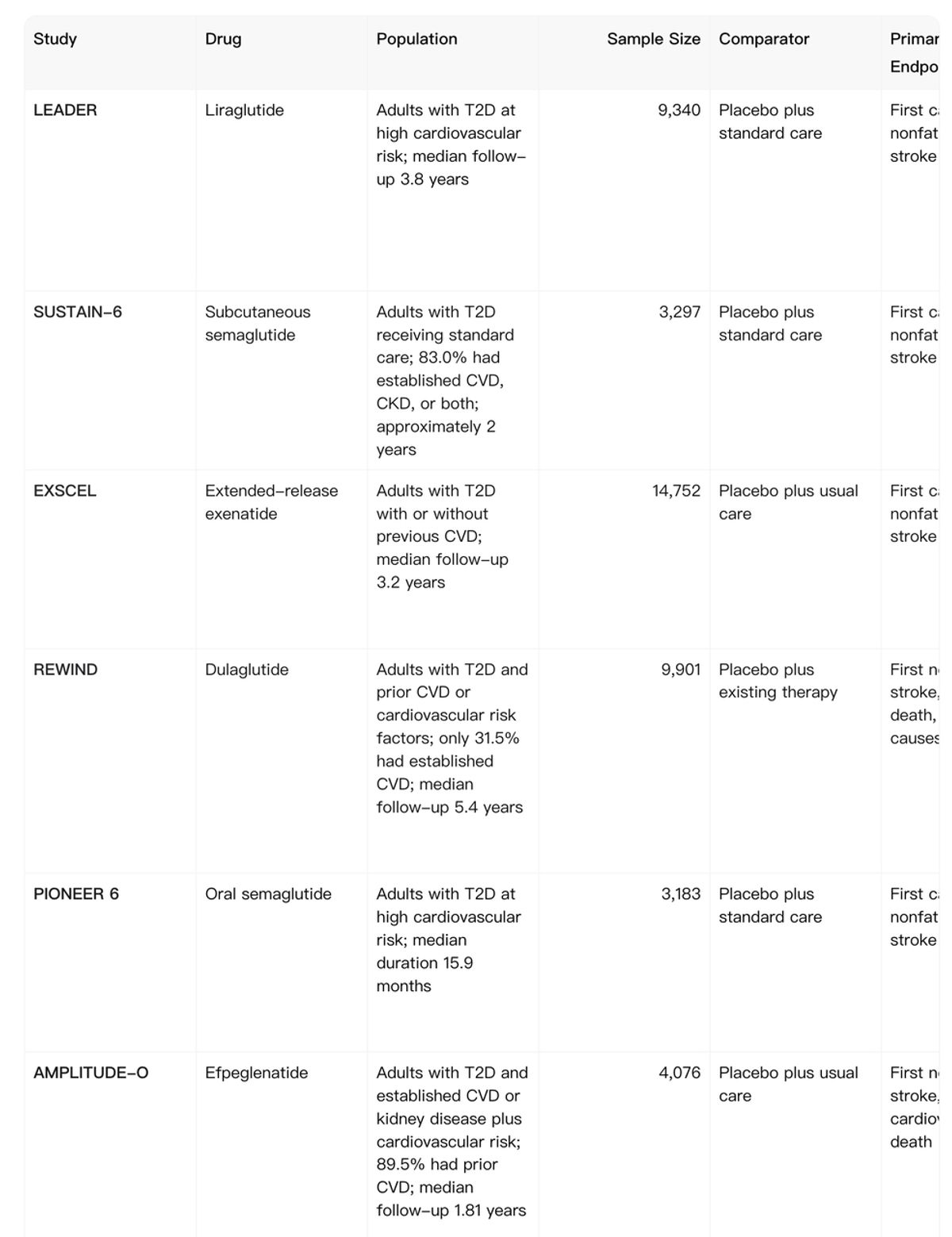
In this GLP-1 cardiovascular evidence-review example, the research task focuses on comparing clinical outcome trials in adults with type 2 diabetes. The structured table helps researchers examine differences in study populations, interventions, comparators, primary cardiovascular endpoints, and reported outcomes. These differences must be considered before drawing conclusions across trials, since the studies are not necessarily direct head-to-head comparisons.
Structured extraction is particularly useful when studies report similar outcomes using different populations, sample sizes, follow-up periods, or trial designs. A common evidence structure makes those differences visible instead of hiding them inside separate summaries.
3. Noah AI: Connecting Claims to Their Sources
Evidence-grounded literature review requires more than attaching a reference list to the end of a report. Important claims should be traceable to the studies supporting them.
Noah's claim-to-source evidence map takes this one step further by organizing the relationship between the clinical claim, supporting study or source, reported result, effect estimate, evidence status, and interpretation boundary.
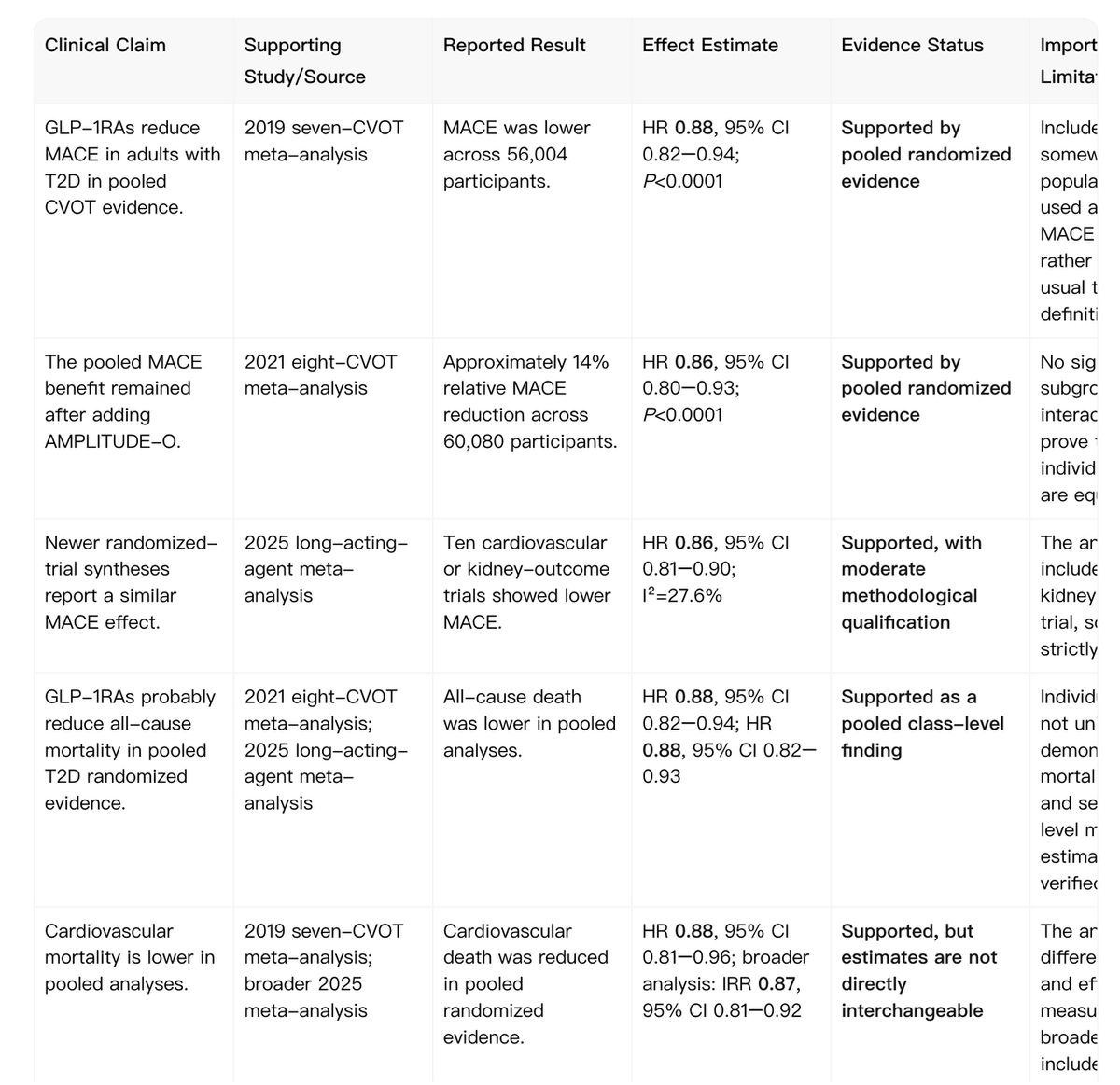
This structure is useful when the researcher needs to distinguish between a finding that is directly supported by a primary study and a broader interpretation that requires additional qualification.
It also makes an important boundary visible: evidence synthesis does not eliminate the need for source verification. Quantitative results, study populations, endpoints, and interpretation should still be checked against the original publications before publication or decision-making.
4. Scite: Stronger Focus on Citation Intelligence
Scite approaches the literature-review problem from a different direction. Its core feature is Smart Citations, which analyze citation statements and classify them as supporting, contrasting, or mentioning the cited work.
This provides information that a conventional citation count cannot provide. A paper with hundreds of citations may have been widely supported, frequently challenged, or simply mentioned as background. Scite is designed to make that distinction easier to inspect.
Scite also provides search and research workflows that use full-text citation statements, along with reports that show how a paper has been cited by later research. This makes it particularly useful when the researcher's question is:
"How has the scientific community supported, challenged, or discussed this finding?"
Scite emphasizes citation context and how subsequent publications discuss existing research. Noah AI's demonstrated workflow emphasizes cross-study biomedical evidence synthesis. These are different research priorities, not evidence that either tool is more accurate or universally more capable.
5. The Main Difference: Citation Context vs Cross-Study Evidence Synthesis
NOAH AI — Build the evidence story
Best suited to moving from a focused biomedical question toward a structured, cited research output with cross-study synthesis, evidence tables, and source traceability.
SCITE — Understand the citation landscape
Particularly useful for investigating how later research cites a paper and whether citation statements support, contrast with, or merely mention its findings.
6. Which Tool Should You Choose?
| If your main task is... | Better fit | Why |
|---|---|---|
| Producing a cited biomedical evidence report | Noah AI | Combines biomedical research, cross-study synthesis, structured evidence, and source traceability. |
| Checking how later papers discuss a specific study | Scite | Smart Citations make supporting, contrasting, and mentioning citation contexts easier to inspect. |
| Investigating whether a finding has been challenged | Scite | Citation classification and citation context can surface later supporting or contrasting evidence. |
| Comparing multiple biomedical trials and their outcomes | Noah AI | Structured evidence tables can place study populations, outcomes, findings, and source information into a common framework. |
7. Neither Tool Replaces Source Verification
Evidence-grounded AI does not mean that researchers can stop checking the underlying literature.
For a serious literature review, researchers should still verify the original papers, confirm quantitative results, check population and endpoint definitions, distinguish primary studies from secondary analyses, and make sure that the cited source supports the exact claim being made.
Scite itself emphasizes that Smart Citation classifications are not quality scores. A supporting citation does not automatically prove that a study is correct, just as a contrasting citation does not automatically prove that it is wrong. Citation context needs to be interpreted alongside study design and the underlying evidence.
Similarly, a structured Noah AI report should be treated as a research draft that can accelerate evidence organization and synthesis, rather than as a substitute for final source verification.
Frequently Asked Questions
Is Noah AI the same as Scite?
No. They overlap in literature research, but their emphasis differs. Scite focuses heavily on citation intelligence and how research findings are discussed by later publications, while Noah AI is oriented toward biomedical research workflows and structured evidence synthesis.
What is Scite particularly good at?
Scite is particularly useful for examining citation context and identifying whether later citation statements support, contrast with, or mention a study.
What is Noah AI particularly good at?
Noah AI is particularly suited to biomedical research tasks that require cross-study synthesis, structured evidence tables, and traceable links between claims and sources.
Should researchers use only one of them?
Not necessarily. The tools address different research needs. Scite can be useful when investigating citation relationships and later evidence, while Noah AI can be useful when turning a focused biomedical question into a structured evidence synthesis.
Turn a Biomedical Research Question Into a Structured Evidence Report
Use Noah AI to organize biomedical literature, compare evidence across studies, and build a cited research report with structured source traceability.